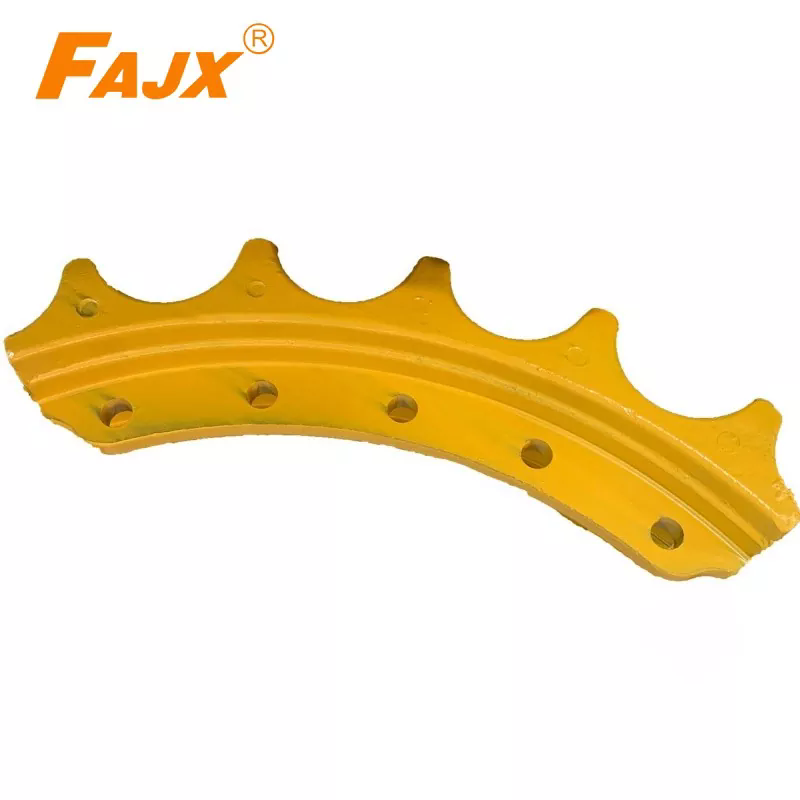

Differences Between Cast Excavator Idler and Roll‑Forged Excavator Idler
Differences Between Cast Excavator Idler and Roll‑Forged Excavator Idler
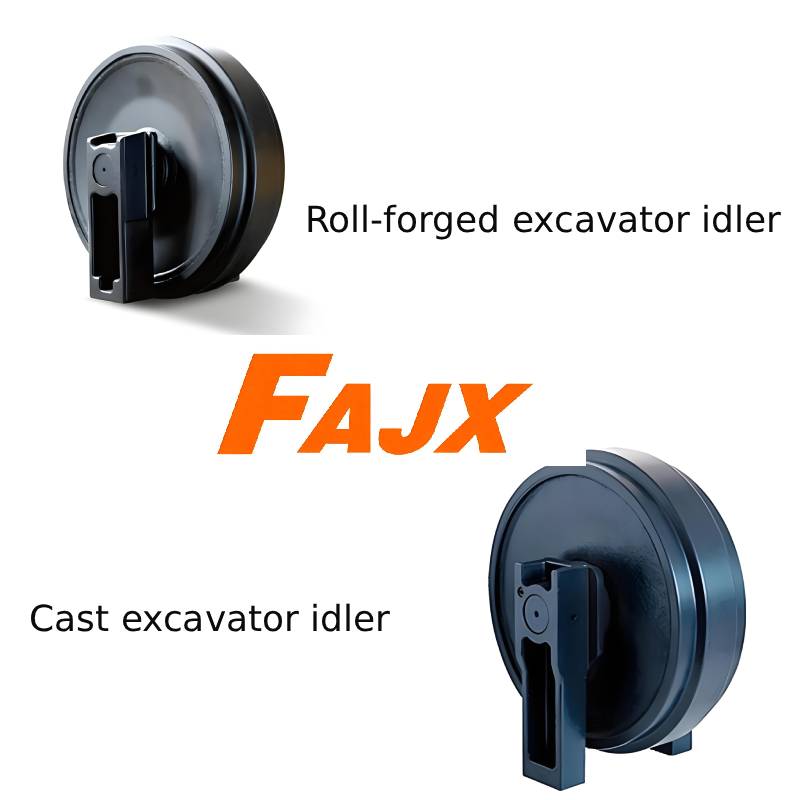
Roll‑forged idler is a split welded forged idler: its rim is formed by roll‑forging / ring‑rolling, while hub & web are cast or forged, then welded into assembly. Cast idler is one‑piece cast, rim‑hub integrally cast.
1. Process & Structural DifferenceCast idler (one‑piece cast steel)Molten steel is poured directly into sand mold / metal die. Rim, hub and web are integrally cast as a single casting blank, followed by machining and intermediate‑frequency quenching on race surface.
‑ Material: ZG35SiMn, SCSiMn2H cast steel
‑ Risks: Prone to porosity, shrinkage, sand holes and inclusions. These are inherent casting defects, which cannot be 100% eliminated even by premium foundries.Roll‑forged idler (roll‑forged rim + welded assembly)
Round steel billet is heated, roll‑forged / ring‑rolled to form idler outer rim. Metal is compressed with complete grain flow lines.
Hub and web are manufactured separately.
Roll‑forged rim and hub are circular‑seam welded into one assembly, then machined, and deep intermediate‑frequency quenching is applied to race surface.
‑ Rim base material: 40Cr, 42CrMo alloy steel. Dense rim structure without casting porosity or shrinkage.
‑ Key point: Welding procedure & flaw detection are critical control points. Poor welding causes weld cracking.Excavator undercarriage parts
2. Material & Performance Comparison
| Item | Cast idler | Roll‑forged idler |
|---|---|---|
| Internal structure | Coarse grain, easy to have shrinkage & porosity, average compactness | Fine compressed grain on rim, continuous metal flow line, high compactness |
| Impact & crack resistance | Average. Prone to body cracking & chipping under heavy impact | Rim features strong impact resistance, hard to chip. Failure mainly occurs at weld seam |
| Wear‑resistant layer on race surface | Intermediate‑frequency quenching, relatively shallow hardening layer, limited matrix toughness | Same intermediate‑frequency quenching. Forged substrate delivers deeper & uniform hardening layer, longer service life |
| Hardness | Race surface HRC45‑52 | Race surface HRC50‑58 |
| Typical failure mode | Main‑body cracking, rim chipping, crack propagation from internal defects | Weld cracking; rim wear, rare body cracking |
| Cost | Low blank cost, 15‑30% lower selling price | High cost for raw material, roll‑forging, welding & NDT inspection, higher selling price |
| Weight | Lighter for same model; some suppliers cut wall thickness | Heavier blank with sufficient rim wall thickness for same part number |
3. Working Condition Selection✅ Cast idler application
‑ Light‑duty earth‑moving, low‑rock, low‑impact working conditions
‑ Urban earthwork, mini excavators, limited budget
Note: Cast idlers are NOT suitable for mine / rocky sites with heavy impact. Tiny internal casting defects will expand and lead to sudden idler cracking.
✅ Roll‑forged idler application
‑ Mine, quarry, rocky sites, heavy‑load & high‑impact conditions
‑ Medium & large excavators (above 20 ton), pursuing longer undercarriage service life
⚠️ When purchasing roll‑forged idlers, make sure suppliers perform weld seam NDT flaw detection. Inferior products with poor welding will suffer weld fracture.
4. Simple On‑site Identification
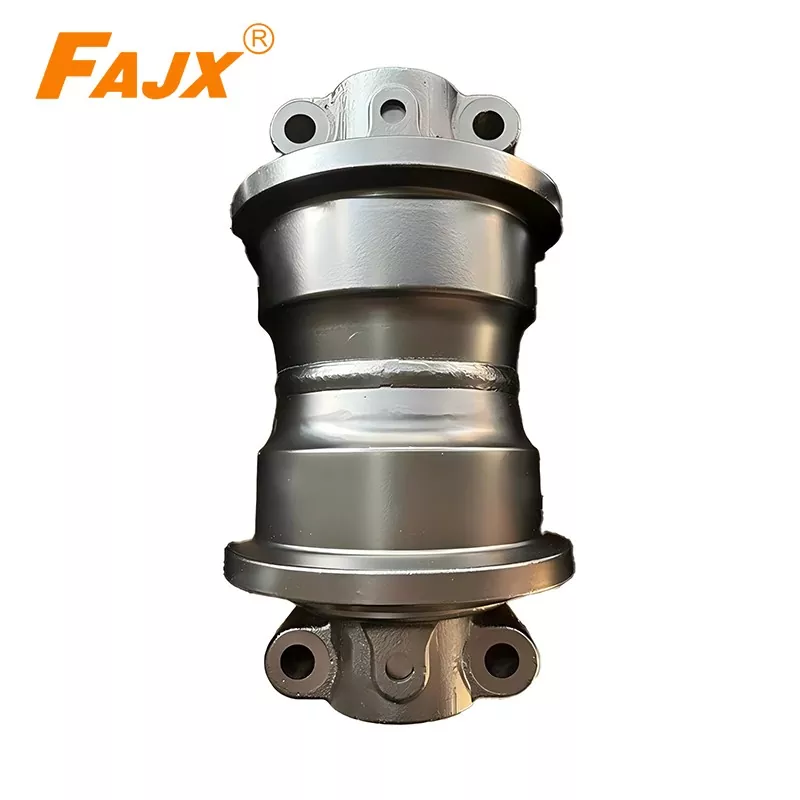
Visual check: Roll‑forged idler has a full circular weld seam between rim and hub. Cast idler is one‑piece without weld seam.
Weight test: Same part number, roll‑forged idler is normally heavier.Excavator undercarriage parts
Fracture observation: Cast section shows tiny porous holes; roll‑forged rim section is fine and uniform.
5. Common Industry Misconceptions
“Roll‑forged equals fully forged”: Only the outer rim is roll‑forged. Many manufacturers still use cast hubs. Clarify this with your supplier before ordering.
“Forged is always better than cast”: Roll‑forged idlers will also fail if poorly welded or under‑heat‑treated. Qualified cast idlers work well for light‑duty jobs.
Whatsapp:+8613655915508
WeChat:+8613799896866
Website:https://www.excavatortrackparts.com
Related News
- How Does a Top Roller Improve Excavator Undercarriage Performance?
- Causes of oil leakage of excavator carrier roller-PC500 Track Roller
- Advantages of One-Piece Forged Excavator Track Roller
- How Does a Drive Sprocket Improve Excavator Performance and Extend Undercarriage Life?
- How Does a Track Bottom Roller Improve Excavator Undercarriage Performance?
- How Does a Drive Sprocket Improve Excavator Undercarriage Performance?
Leave me a message